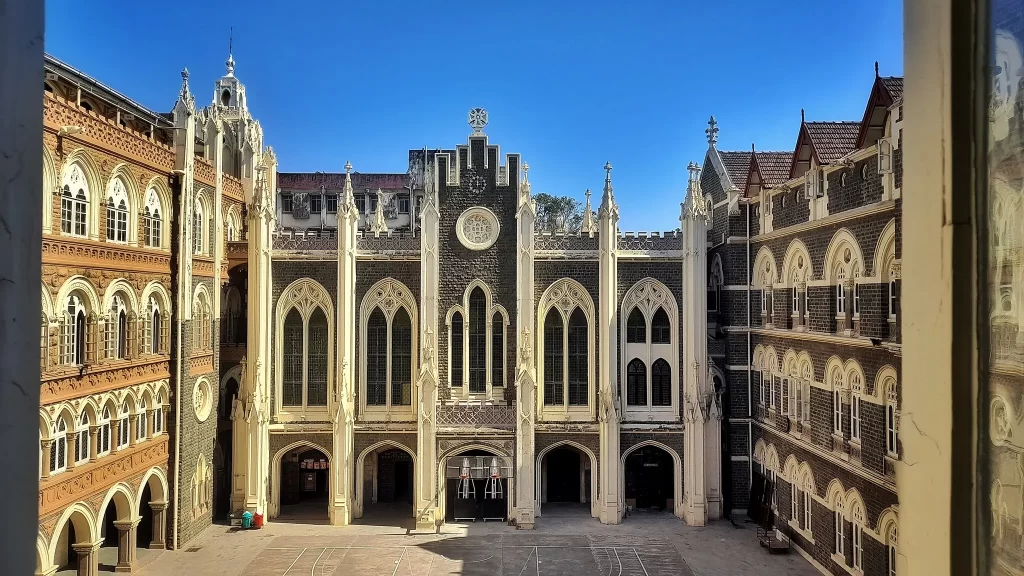
Mumbai during Ganesh Chaturthi is something else entirely. The entire city transforms into a massive celebration, with every street corner echoing with chants of “Ganpati Bappa Morya!” But if you’re planning to experience this incredible festival, you need to know where to go. Some pandals have become legendary over the decades, drawing millions of devotees from across the world.
Famous Ganpati Pandals in Mumbai: Discover the Top 5 You Must Visit!
Here’s your guide to the most iconic Ganpati pandals that define Mumbai’s Ganesh Chaturthi experience.
Lalbaugcha Raja
Let’s start with the obvious one. Lalbaugcha Raja is one of the most famous pandals and attracts millions of devotees every year, famously called “King of Lalbaug,” established in 1934 by fishermen from the Koli community. This isn’t just hype – there’s something genuinely special about this place.
The idol here stands at an impressive 18-20 feet, and locals will tell you it’s wish-fulfilling. Whether you believe in that or not, the energy here is undeniable. More than 15 to 20 lakh devotees take darshan yearly, so expect crowds. The famous “Navsachi Line” (the line for those making special wishes) can take hours, but many say it’s worth the wait.
What makes this pandal special isn’t just its size or fame – it’s the attention to detail. Every year brings different thematic decorations, and the craftsmanship is remarkable.
Siddhivinayak Temple, Dadar: Where Tradition Meets Devotion
This renowned pandal, set in the revered Siddhivinayak Temple in Dadar, showcases a beautifully adorned idol of Lord Ganesha. The temple, originally built in 1801, is a focal point for devotees throughout the year. During Ganesh Chaturthi, the atmosphere becomes electric.
Unlike some of the newer pandals, Siddhivinayak has this timeless quality. It’s been a pilgrimage site for over two centuries, so when Ganesh Chaturthi comes around, the devotion here feels deeply rooted. The idol is made from eco-friendly clay and often adorned with gold and silver offerings from devotees.
Keshavji Naik Chawl: Mumbai’s Oldest Legacy
Here’s something most people don’t know: Keshavji Naik Chawl Ganpati is the oldest Mumbai Ganpati pandal, founded in the year 1893. It is located between the chawl numbers 1 and 2 in Girgaon, Mumbai. This pandal has been celebrating Ganesh Chaturthi for over 130 years – imagine the history these walls have seen.
What’s beautiful about this place is its commitment to tradition. The height of the idol is always 20 feet, and they’ve maintained their eco-friendly approach long before it became trendy. The decorations here aren’t flashy, but there’s something deeply moving about experiencing a celebration that has remained largely unchanged for more than a century.
Khetwadi Ganraj: Going Big and Going Green
Among all Ganesha statues celebrating mandals, Khetwadi Ganraj Mandal stands out because of its environmentally responsible practices and unconventional decorations. This pandal has been making headlines since 1959, and they’re known for having one of Mumbai’s tallest Ganesh idols – sometimes reaching up to 35 feet.
But size isn’t everything here. What sets Khetwadi apart is their innovative themes and their commitment to environmental responsibility. Each year, they create elaborate decorations that often carry social messages, making this pandal as much about art and awareness as it is about devotion.
Address: 12th Lane Khetwadi, Girgaum Nearest Stations: Grant Road or Charni Road (Western line) Aarti Timings: Morning 9-10 AM, Afternoon 2 PM, Evening 8 PM
Chinchpoklicha Chintamani: The Organized Experience
Known as Chinchpokli Sarvjanik Utsav Mandal, this Ganesh pandal is located close to Lalbaugcha Raja. You are certain to love the systematic structure where there are separate lines and great security.
This pandal, established in 1951, has perfected the art of managing massive crowds while maintaining the spiritual atmosphere. If you’re someone who appreciates good organization alongside devotion, this is your spot. The idol here is made from eco-friendly clay and is known for its beautiful gold and silver decorations. The 22-feet idol follows the Jagannath Puri style this year
Address: Dattaram Lad Road, Chinchpokli Nearest Station: Chinchpokli (Central line) Darshan Timings: 6 AM to 2 PM and 4 PM to 10 PM Special: Known for excellent crowd management
GSB Seva Mandal: The Gold Standard of Artistry
The Goud Saraswat Brahmin (GSB) Seva Mandal Located at King’s Circle is in a league of its own when it comes to sheer artistic brilliance. Established in 1954, this pandal has consistently set new standards for creativity and craftsmanship that other pandals aspire to match.
What makes GSB special isn’t just one thing – it’s everything. The idol itself is a masterpiece, but the real magic lies in the elaborate themed decorations that change every year. We’re talking about recreations of famous temples, historical monuments, or even entire fantasy worlds, all crafted with incredible attention to detail.
The pandal attracts not just devotees but artists, photographers, and culture enthusiasts who come specifically to witness what many consider the most beautiful Ganesh pandal in Mumbai. The lighting, the design elements, the way everything comes together – it’s like walking into a different world entirely. Many people visit GSB purely for the artistic experience, and they’re never disappointed. The eco-friendly clay idol is adorned with over 60 kilograms of pure gold and 336 kilograms of silver, with an insurance cover of 360 crores.
Address: G.S.B. Sports Club Ground, R.A. Kidwai Road, King’s Circle, Matunga Contact: 9321798515 / 9321540156 / 8655192166 Nearest Stations: King’s Circle (Harbour line), Matunga (Central line) Special Note: Available only for first 5 days of the festival, so visit early
The Ganesh Galli Experience
Right outside Chinchpokli Station on Dattaram Lad Marg, you’ll find one of Mumbai’s oldest Ganpati pandals, dating back to 1920. The beauty of this pandal lies in its simplicity – it’s a reminder that devotion doesn’t need elaborate decorations to be powerful.
Throughout Ganesh Galli the main Ganesh festival processions lead towards the South Mumbai immersion area of Girgaum Chowpatty, so this area becomes the heart of the celebration during the festival.
Andhericha Raja – The Celebrity Favorite
A favorite among Bollywood celebrities, this Andheri pandal offers smooth darshan experience with excellent crowd management.
Address: Ganesh Maidan, Azad Nagar II, Veera Desai Road, Andheri West Nearest Station: Andheri (Western line) Waiting Time: 15 minutes to 1 hour
Fortcha Raja – The Heritage Marvel
This 60-year-old pandal in Fort area features 42 different Ganesha replicas from temples across India and the world.
Address: Icchapurti Ganesh Chowk, Dr. Sunderlal Bahal Path, Fort Nearest Stations: Churchgate (Western), CST (Central) Timings: 6 AM to 8 PM
Tejukayacha Raja – The Eco-Warrior
Famous for its 22-foot eco-friendly paper idol made entirely from biodegradable materials, this mandal even holds a Guinness World Record.
Address: Tejukaya Mansion, Dr. Ambedkar Road, Lalbaug Special: Made from paper, gum, powder, and coconut husk with natural colors
Bandra West Sarvajanik Ganeshotsav Mandal
Known for recreating exact replicas of famous monuments. This year features a 52-foot replica of Vivekananda Rock Memorial.
Address: Bandra Reclamation Nearest Station: Bandra (Western line) Special: Features special lamps brought from Hyderabad
Juhu Ganesh Mandal – The Beach Experience
Located near Juhu beach, offering a unique coastal-themed Ganpati experience.
Nearest Station: Vile Parle (Western line), then short ride to Juhu Special: Beach-themed decorations and proximity to the sea
Avoid peak hours (3 PM to 2 AM) unless you enjoy the crowd energy
Getting Around:
Local trains are your best bet – most pandals are near railway stations
Keep extra change for auto-rickshaws for final connectivity
Download Mumbai local train apps like Yatri for real-time updates
What to Carry:
Water bottle and light snacks
Comfortable walking shoes
Small bag (many pandals have security checks)
Phone with full charge for navigation and photos
Festival Dates 2025:
Ganesh Chaturthi: August 27, 2025 (Wednesday)
Visarjan: September 6, 2025 (Saturday)
Food to Try: While pandal hopping, don’t miss the street food around these areas – modak (Bappa’s favorite), vada pav, bhajiya, and sugarcane juice are festival staples available at most pandal locations.
Mumbai’s Ganesh festival isn’t just about darshan – it’s about experiencing the city’s soul. Each pandal tells a story, each crowd shares a collective faith, and each moment creates memories that last a lifetime. So put on your most comfortable clothes, keep your spirits high, and get ready to witness Mumbai at its devotional best.
Ganpati Bappa Morya!
More Than Just Tourism
What strikes you about Mumbai’s Ganesh Chaturthi isn’t just the scale or the artistry – it’s how the entire city participates. These pandals aren’t tourist attractions; they’re community celebrations that happen to welcome visitors. The fishermen who started Lalbaugcha Raja, the residents of Girgaon who’ve maintained their century-old tradition, the environmentally conscious organizers of Khetwadi – they’re all keeping something alive that’s much bigger than just a festival.
Every August, the streets of Maharashtra come alive with colour, music, and devotion as Ganesh Chaturthi sweeps across the state in a whirlwind of celebration. But in Mumbai, it feels especially intense because the city’s spirit – its diversity, its energy, its ability to bring people together – gets channeled into these 11 days of celebration.
Whether you’re there for the spiritual experience, the cultural immersion, or simply to witness one of India’s greatest festivals, these pandals offer something unique. Just remember to be patient with the crowds, respectful of the devotion around you, and open to the incredible energy that defines Mumbai during Ganesh Chaturthi.
The festival isn’t just about seeing beautiful idols – it’s about experiencing how an entire city comes together to celebrate something they deeply believe in. And that’s something you can’t get from any guidebook.
After years of keeping my money in traditional bank savings accounts like millions of Indians, I stumbled upon a financial truth that completely changed how I view “safe” banking. This discovery came from an unexpected source: my Slice savings account.
Unlike traditional banks that offer savings account interest rates of 2.5-3% calculated monthly or quarterly, Slice offers 100% of the RBI Repo Rate (currently 5.5%) with interest credited daily. This simple difference made me realize I had been losing thousands of rupees over the years without even knowing it.
My Personal Wake-Up Call
When I compared my traditional bank savings account returns (around 2.75% annually) with what I was earning through Slice’s daily interest system at 5.5% per annum, the numbers were shocking. A ₹2 lakh deposit over 5 years showed I could earn an additional ₹84,553 – money that could fund multiple family vacations or build a substantial emergency fund.
This realization led me to search for tools that could help calculate these differences accurately – not just between compounding frequencies, but between different types of accounts with varying interest rates and calculation methods. After hours of searching online, I found a frustrating gap: there was no reliable, user-friendly calculator specifically designed for Indian investors to compare traditional savings accounts vs. modern high-yield daily interest options.
Why I Built the Solution
As a techy developer, I couldn’t accept this information gap. Indian investors deserve access to tools that help them understand the real difference between traditional banking products and modern alternatives like high-yield daily interest accounts.
That’s why I created the Daily Compound Interest Calculator – a free tool specifically designed to show Indian investors exactly how much they’re earning (or losing) by choosing different account types, interest rates, and compounding frequencies.
This wasn’t my first attempt at bridging the financial literacy gap in India. Over the years, I’ve developed several calculators to help people make better financial decisions, including a SIP Calculator for mutual fund investments and a Loan Repayment Calculator for understanding EMI obligations. But the daily interest calculator was born from a very personal need – understanding my own savings account performance.
The Hidden Mathematics of Banking Inequality
The Interest Rate and Frequency Factor
Most Indian bank savings accounts offer interest rates of 2.5-3.5% per annum, calculated and credited monthly or quarterly. But what if you could get 100% of the RBI Repo Rate (currently 5.5%) with interest credited daily?
The Real-World Comparison:
Traditional Savings Account: 2.75% per annum, monthly compounding
High-Yield Daily Interest Account: 5.5% per annum, daily compounding
The difference isn’t just in the base interest rate – it’s also in how frequently that interest is calculated and added to your principal.
The traditional banking industry’s approach to savings account interest isn’t accidental:
Profit Maximization: Banks use your savings deposits to provide loans at higher rates (10-15%). Lower interest rates on savings accounts mean higher profit margins.
Cash Flow Management: Monthly or quarterly interest payments help banks manage their cash flows more predictably.
Customer Awareness: Most customers focus on the convenience of banking services, not the interest rate or crediting frequency on their savings accounts.
Beyond Traditional Savings: The Broader Landscape
Available Alternatives in India
High-Yield Digital Savings Accounts: Neo-banks offering 100% of RBI Repo Rate with daily interest
Premium Savings Accounts: Some traditional banks offer higher rates for higher balances
Liquid Mutual Funds: Daily NAV calculation with potentially better returns
Digital Banking Solutions: Fintech companies like Slice offering competitive interest rates
The Technology Solution I Built
Why Existing Tools Weren’t Enough
During my research, I found several issues with available calculators:
Generic international tools not suited for Indian savings account rates and banking practices
Complex interfaces that intimidated average savers
Lack of comparative analysis between different interest rates and crediting frequencies
No consideration for Indian banking scenarios and typical savings account features
Features of My Daily Compound Interest Calculator
Core Functionality:
Compare traditional vs. high-yield daily interest savings accounts
Calculate exact rupee differences for any savings amount
Show year-wise breakdown of interest earnings growth
Mobile-responsive design for on-the-go calculations
Indian-Specific Features:
Calculations in Indian Rupees (₹)
Common Indian savings account interest rates pre-loaded
Comparison with popular Indian banking and digital savings options
Real-world scenarios based on typical Indian savings patterns
The Bigger Picture: Financial Literacy in India
Why This Matters Beyond Individual Returns
This isn’t just about earning a few thousand extra rupees. It’s about:
Financial Awareness: Understanding how your money actually works
Informed Decision-Making: Comparing options based on complete information
Wealth Building: Small differences compound into significant amounts over decades
Banking Transparency: Pushing financial institutions to offer better products
My Mission as a Financial Advocate
Through tools like the Daily Compound Interest Calculator and educational content, I aim to bridge the information gap between financial institutions and individual investors. Everyone deserves access to clear, actionable financial information.
Conclusion: Small Changes, Big Impact
The difference between annual and daily compounding might seem technical, but it represents something much larger: taking control of your financial future through informed decision-making.
By understanding these concepts and using tools designed specifically for Indian investors, you can ensure your money works as hard as you do. Every rupee counts when building long-term wealth.
Take action today: Calculate your potential gains with the Daily Compound Interest Calculator and start making informed decisions about your financial future.
About this tool and why?
The Daily Compound Interest Calculator was born from my personal experience with different banking products and the realization that Indian investors needed better tools to compare their options. Through technology and education, we can level the playing field in personal finance.
Disclaimer: This article is for educational purposes only. Please consult with qualified financial advisors for personalized investment advice. All calculations are based on theoretical compounding and don’t account for taxes, fees, or other factors that may affect actual returns.
L.S. Raheja College of Arts & Commerce has released its third merit list for various undergraduate programs. This comprehensive guide provides detailed information about the minimum percentage requirements for different courses across various categories.
About L.S. Raheja College
L.S. Raheja College of Arts & Commerce is a prestigious educational institution known for its quality education and diverse course offerings. The college provides multiple undergraduate programs catering to students from different academic backgrounds and interests.
Third Merit List – Course-wise Requirements
1. First Year Bachelor of Arts (FYBA)
The Bachelor of Arts program offers a foundation in liberal arts and humanities, preparing students for various career paths.
Category
Minimum Percentage Required
Open Category
52%
Gujarati Linguistic Minority
62.17%
2. First Year Bachelor of Commerce (FYBCOM)
The Bachelor of Commerce program focuses on business, accounting, and economic principles.
Category
Minimum Percentage Required
Open Category
54.83%
Gujarati Linguistic Minority
Not specified
3. First Year B.Com Banking and Insurance (BBI)
This specialized commerce program focuses on banking sector and insurance industry knowledge.
Category
Minimum Percentage Required
Open Category
55%
Gujarati Linguistic Minority
45%
4. First Year B.Com Management Studies (FYBMS)
The Bachelor of Management Studies program provides comprehensive business management education.
Category
Minimum Percentage Required
Open Category
65%
Gujarati Linguistic Minority
50%
5. First Year Bachelor of Arts in Multimedia and Mass Communication (BAMMC)
This program focuses on media, journalism, and communication studies with different requirements based on academic background.
Category
Stream
Minimum Percentage Required
Open Category
Arts
64%
Open Category
Science
58%
Gujarati Linguistic Minority
All Streams
49%
6. First Year Bachelor of Science in Information Technology (B.Sc IT)
The B.Sc IT program has specific requirements for mathematics along with overall percentage criteria.
L.S. Raheja College’s third merit list offers opportunities across diverse academic disciplines. The varied percentage requirements reflect the competitive nature of different programs, with management studies having the highest cut-off and IT programs being more accessible.
Prospective students should carefully review the requirements for their desired program and category before proceeding with the admission process.
For the most current information and detailed admission procedures, candidates are advised to visit the official college website or contact the admissions office directly.
Good news for Mumbai students! Jai Hind College has just released its third merit list. If you missed the first two lists, this is your chance to secure admission in one of Mumbai’s top colleges.
📊 Quick Cutoff Table – Third Merit List
Course
Stream/Category
Required Percentage/Marks
BA
Open Category
80.00% (Class 12 aggregate)
BSc
Open Category
45.60% (Class 12 aggregate)
BCom
Open Category
84.00% (Class 12 aggregate)
BSc IT
Open (Science)
54 marks (Class 12 Math)
BSc IT
Open (Commerce)
54 marks (Class 12 Math)
🏆 Professional Courses (Entrance + Class 12)
Formula: 50% Entrance Exam + 50% Class 12 Marks
Course
Category
Cutoff
BFM (Financial Markets)
Open
91.25%
BFM
Sindhi
83.25%
BAF (Accounting & Finance)
Open
90.75%
BAF
Sindhi
83.40%
BIA (Information Analysis)
Open
88.80%
BBI (Banking & Insurance)
Open
86.50%
🎬 Media & Digital Courses
Course
Stream
Cutoff
BMM (Mass Media)
Arts
83.50%
BMM
Commerce
86.50%
BMM
Science
74.10%
BMM
Sindhi
55.17%
BCom Digital Strategy
Arts
86.00%
BCom Digital Strategy
Sindhi
76.16%
🧬 Science Specialization
Course
Stream
Cutoff
Biotechnology
Arts
78.40%
🔥 What’s Hot This Year?
Highest Cutoffs:
BFM (Financial Markets): 91.25% – Most competitive!
BAF (Accounting & Finance): 90.75% – Close second
BIA: 88.80% – Data analytics is trending
Good Options for Science Students:
BMM (Science stream): Only 74.10% – Great opportunity!
BSc: Just 45.60% – Very accessible
Commerce Students:
BCom: 84.00% – Reasonable cutoff
BMM (Commerce): 86.50% – Slightly higher
🌟 Why Choose Jai Hind College?
Prime Location: A Grade college in Mumbai
Industry Connections: Great placement opportunities
St. Xavier’s College, Mumbai, one of the city’s most prestigious educational institutions, has officially released its First Merit List for the academic year 2025-26. The Empowered Autonomous Institute continues to maintain its reputation for academic excellence, with competitive cutoffs across all undergraduate programs.
Overview of Admission Process
St. Xavier’s College follows a comprehensive admission process that varies by course. While some programs are based purely on Class XII board exam percentages, others incorporate entrance examinations with a weighted formula of 60% entrance exam and 40% board exam scores.
First Merit List Cutoffs
xaviers_college
Commerce Programs
Course
Christians (MH Board)
Christians (Other Boards)
General (MH Board)
General (Other Boards)
SWD/Special
B.Com (General)
50.67%
55.00%
76.33%
91.60%
85.83% / 45.80%
B.Com (BAF)
88.00%
84.00%
92.17%
97.20%
95.33% / 64.67%
B.Com Management Studies
69.53*
71.13*
75.93*
82.04*
77.53* / 64.53*
*Scores based on 60% Entrance + 40% Board Exam formula
Science Programs
Course
Christians (MH Board)
Christians (Other Boards)
General (MH Board)
General (Other Boards)
SWD/Special
B.Sc (General)
50.83%
–
65.00%
–
60.00% / NIL
B.Sc (BCB – Biotech)
81.67%
83.71%
91.67%
95.00%
82.67% / 85.20%
B.Sc (Data Science & AI)
84.00%**
67.00%**
95.00%**
96.00%**
100.00%**
B.Sc (IT)
59.40*
50.56*
63.27*
69.27*
NIL / 65.47*
*Scores based on 60% Entrance + 40% Board Exam formula **Based on Mathematics scores
Arts Programs
Course
Christians (MH Board)
Christians (Other Boards)
General (MH Board)
General (Other Boards)
SWD/Special
B.A (Aided)
76.50%
79.17%
90.00%
97.40%
95.20% / 62.67%
B.A Economics & Statistics
80.17%
91.00%
89.83%
97.80%
96.20% / 80.17%
B.A Psychology & English
86.50%
84.17%
93.33%
98.00%
97.20% / 87.00%
B.A Mass Comm (MCJ)
65.80*
52.53*
76.80*
77.60*
57.53* / 66.12*
*Scores based on 60% Entrance + 40% Board Exam formula
*HSC (Arts) refers to Maharashtra State Board Std. 12th Arts Stream *Admission subject to availability of subject combination
Special Category Provisions
St. Xavier’s College continues its commitment to inclusive education through special provisions for Students with Disabilities (SWD). Cutoffs for this category vary significantly across programs, with some courses offering substantial relaxation in admission criteria.
Key Observations
Trend Analysis: General category students from boards other than Maharashtra consistently face higher cutoffs across most programs, reflecting the competitive nature of admissions.
Program Popularity: Psychology & English, Data Science & AI, and B.Com (A&F) emerge as the most competitive programs with cutoffs reaching up to 98-100%.
Entrance-Based Programs: Courses using the 60:40 entrance-to-board exam ratio provide alternative pathways for admission, potentially benefiting students who perform well in competitive exams.
Christian Minority Advantage: As expected from a Christian minority institution, students from the Christian community enjoy reserved seats with relatively lower cutoff requirements.
What’s Next?
Students who have made it to the First Merit List must complete their admission formalities within the stipulated time frame. Those who haven’t made the cut should wait for subsequent merit lists, as cutoffs typically decrease in later rounds.
Important: Keep checking the college website and notice board for updates on subsequent merit lists and admission procedures.
B.K. Birla College, Kalyan has officially announced its Third Merit List for the academic year 2025-26, providing crucial admission information for aspiring students across various undergraduate programs. The college, which holds Empowered Autonomous Status and is affiliated to the University of Mumbai, has released cut-off percentages for different categories and courses.
Key Highlights of the Third Merit List
The merit list covers admissions for:
F.Y.B.Com (First Year Bachelor of Commerce)
F.Y.B.Sc (First Year Bachelor of Science) – Multiple subject combinations
F.Y.B.A (First Year Bachelor of Arts) – Both Marathi and English Medium
F.Y.B.Com Third Merit List Cut-offs
Category
Cut-off Percentage
Open
50.00%
OBC
44.00%
SC
40.00%
ST
40.00%
NT (A)
40.00%
NT (B)
40.00%
NT (C)
40.00%
NT (D)
40.00%
SBC
44.17%
EWS
40.00%
SEBC
40.00%
F.Y.B.Sc Third Merit List Cut-offs
Physics, Chemistry, Mathematics (PCM)
Category
Cut-off Percentage
Open
48.00%
OBC
47.00%
SC
46.00%
ST
40.00%
NT (A-D)
47.00%
SBC
47.00%
EWS
47.00%
SEBC
47.00%
Chemistry, Botany, Zoology (CBZ)
Category
Cut-off Percentage
Open
48.00%
OBC
47.00%
SC
46.00%
ST
40.00%
NT (A-D)
47.00%
SBC
47.00%
EWS
47.00%
SEBC
47.00%
Chemistry, Botany/Microbiology, Zoology
Category
Cut-off Percentage
Open
52.00%
OBC
48.67%
SC
47.00%
ST
41.00%
NT (A-D)
48.00%
SBC
48.00%
EWS
48.00%
SEBC
48.00%
F.Y.B.A Third Merit List Cut-offs
Marathi Medium
Category
Cut-off Percentage
Open
45.00%
OBC
42.00%
SC
40.00%
ST
40.00%
NT (A-D)
40.00%
SBC
43.00%
EWS
43.00%
SEBC
43.00%
English Medium
Category
Cut-off Percentage
Open
47.00%
OBC
45.00%
SC
45.00%
ST
45.00%
NT (A-D)
45.00%
SBC
45.00%
EWS
45.00%
SEBC
45.00%
Important Information for Students
Merit List Date: June 5th, 2025
Students who meet the cut-off criteria mentioned above are eligible to apply for admission to B.K. Birla College, Kalyan. The college offers a comprehensive educational experience with its autonomous status, allowing for innovative curriculum design and flexibility in academic programs.
Related Resources
For students looking for more information about Mumbai colleges and admission processes, you may find these resources helpful:
For the most current information and detailed admission procedures, students are advised to visit the official college website at https://bkbck.edu.in/notices.
The third merit list represents another opportunity for students to secure admission to one of Mumbai’s respected educational institutions. Students are encouraged to act promptly if they meet the eligibility criteria outlined above.
This information is based on the official Third Merit List released by B.K. Birla College, Kalyan on June 5th, 2025. Students are advised to verify details with the college directly for the most accurate and up-to-date information.