Get ready to witness history in the making as Paris gears up to host the much-awaited Summer Olympics from July 26 to August 11, 2024.
As the host city, Paris prepares to welcome athletes and spectators alike to its iconic venues, promising an unforgettable celebration of international sport.
The Games, officially known as Paris 2024, mark a historic moment as athletes from around the globe converge in the City of Light, ready to showcase their talent and passion on this prestigious stage.”
The most iconic Venus of the Paris Olympics
From historic location to famous Monuments, the city of light will put on quite a show. Here’s where to catch it
There will be no shortage of iconic views of Paris at the Olympics in August. From the palaces of Versailles to the Place de la Concorde, organizers have made sure that the city of light’s most famous landmarks will take center stage during the Olympics.
Here is a look at the most iconic spots that will host the competition:-
Eiffel tower
La Dame de Fer ( The Iron Lady ) Need no introduction and is still going strong at 135 yrs old Men’s and women’s volley ball players will compete by this 330 meter behemoth. They will be watched on by 13,000 fans at the temporary Eiffel Tower Stadium.
2. Palace of Versailles
Once the residence of French royalty, the chateau is one of the most popular tourist spots in Paris. King Louis XVI and Queen Marie Antoinette held lavish banquets here before the French Revolution brought their reign to a gruesome end.
Come August, equestrian riders will gallop at the heart of the palace’s gardens while modern pentathlon events will also take place here.
3. Hotel de Ville
The imposing-looking city Hall, which has been around since 1357, has a massive façade stretching high wide, giving off a golden hue when lights are switched on at night having stood the test of time, it seems rather fitting to start the marathon from its paved forecourt.
4. La Concorde
The idea to transport imposing obelisks to paris came about around the 19th Century during Napoleon’s military campaign in Egypt. This summer ,Break Dancer, BMX freestylers,3 on 3 basketballers and skate Boarders will share the attention at this famous venues
5. Les Invalides
Les Invalides
Hotel des Invalides houses Napoleon’s tomb and is a haven for military enthusiasts. The landmark has a giant golden dome standing at 107 meters and is covered with nearly 13 kilograms of gold. Perhaps fittingly, giving its military feel, Olympic archers will set their sights here.
6. Trocadero
The Trocadero is where hordes of kilt-wearing Scottish Soccer fans congregated at the 1998 world cup, singing “we’re the famous Tartan Army” as the drank and danced. It should offer a great vantage point for watching triathlon road cycling, marathon and race walking events.
7. Grand Palais
The palaces with its green-tinged glass roof was built for the paris universal Exhibition in 1900. more than 6000 Tonnes of steel were used to build the nave. Taekwondo and Fencing Fans will get to watch events here.
8. Bercy Arena
The 20,000 seater indoor arena has witnessed great drama over the years, from the Davis Cup finals to the Paris Masters. It has also hosted NBA games and international handball matches.
Madonna and Johnny Hallyday have also held concerts here. Located a stone’s throw from France’s Finance Ministry, it will host artistic Gymnastics, Basketball and Trampoline events.
9. Stade de France
French soccer great Zinedine Zidane etched his name in history when he scored two goals in the 1998 World Cup final against Brazil at the then-newly constructed 80,000 capacity stadium.
Over the years, it has hosted track and field world championships and many international soccer and rugby games. This year, it will hold athletics competitions on a new-look purple track and rugby sevens.
10. La Defense Arena
Situated near a vibrant business hub 11 kilometers northwest of central paris, the boat-shaped areana has hosted seminars and club ruby matches of Racing 92 since 2017. Now it will host Olympic swimming thanks to its multi-purpose structure. The arena’s façade is made up of aluminium and glass scales and looks impressive when lit up at night.
11. Stade Yues-du-Manoir
The stadium is located the northwest suburb of colombes and links the city’s Olympic past and its present. In 1924, it was the main venue for the paris games. Today it’s far more low-key, Hosting field hockey matches this time around.
Whether it’s the thrill of track and field, the grace of gymnastics, or the intensity of team sports, the Games promise to inspire and unite us all.
Let’s join hands in celebrating this extraordinary event that transcends borders and brings the world together in the spirit of sportsmanship and achievement.
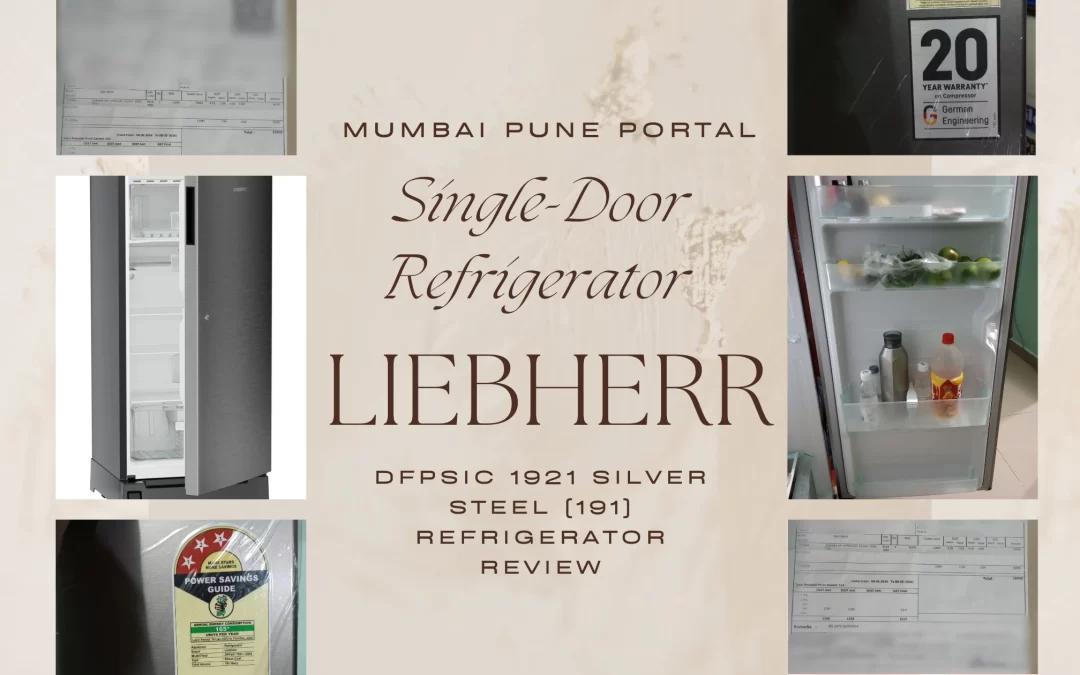
I recently purchased a Liebherr Single-door refrigerator, so this review is based on my experience.
As a consumer, I understand the frustration of searching through countless blogs and youtube channels, only to find that many of them are nothing but fluff when it comes to providing genuine insights and reviews on refrigerators, particularly single-door models. It was this very experience that motivated me to share my own detailed review on the Liebherr DFPSIC 1921 Silver Steel (191) Single Door Refrigerator, which I recently purchased.
I wanted to ensure that I can share all my relevant information in one place – a comprehensive guide that would help others like myself make an informed decision.
Proof Validation
As this was our first time purchasing the refrigerator:-
Reasons why I purchased this?
Preserving Food Freshness
Food Safety
Chilled Water
Larger storage spaces for food and beverages
Last but on list to improve hygiene in the kitchen
As someone looking to buy a Single Door Refrigerator – a crucial aspect I would suggest is to look for the Compressor warranty.
This 20-Year Warranty on the compressor is a game-changer in this price segment. It offers peace of mind, ensuring that the heart of this refrigerator remains reliable and efficient for more than a decade. This aspect alone speaks volumes and give me a confidence in the product’s durability and longevity.
I was also looking for something (innovative features) that easy to open the door – this refrigerator as a Hands-Free Opening is a true revelation. With a gentle press of a foot, I can open the refrigerator door without using my hands – a feature that is not only convenient but also highly practical, especially when my hands are occupied with grocery bags or other items.
Hands-Free Opening in Refrigerator
Now if I talk about Design part –
The sleek pocket handle design enhances the refrigerator’s aesthetics, seamlessly integrating into modern kitchen styles. The LED lighting, on the other hand, ensures even and optimal illumination, allowing you to easily locate your items while also being energy-efficient.
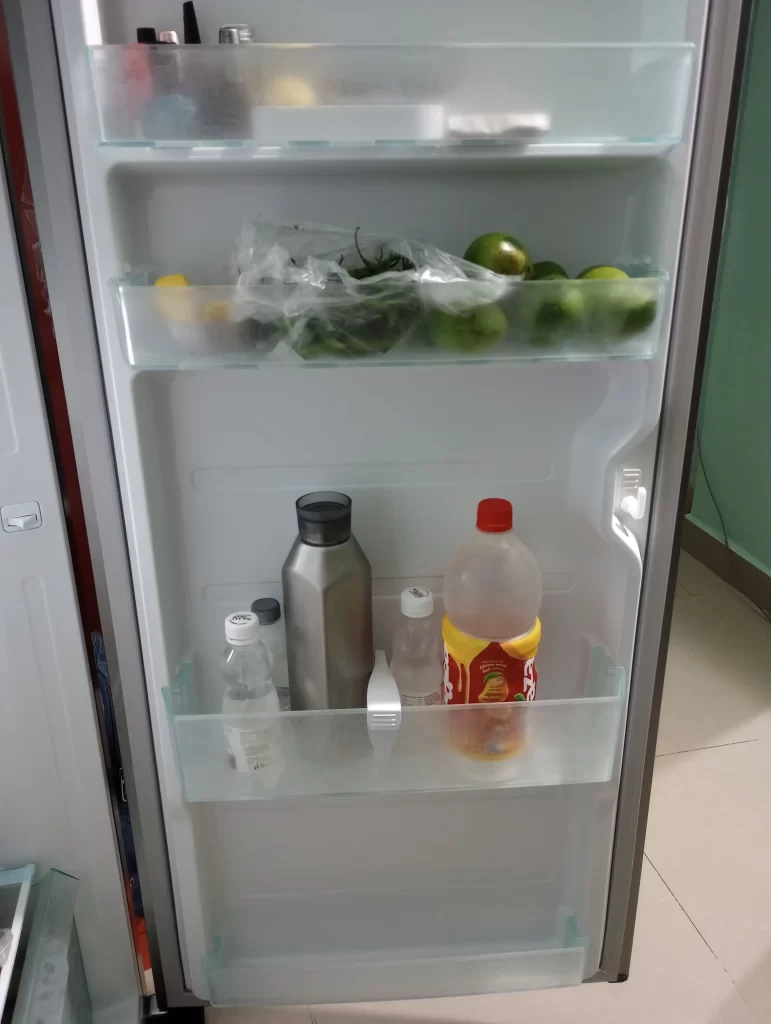
The best part about Liebherr Refrigerator that caught my mommy eye is the Vegetable Sorting System. Keep your leafy greens and fruits separate with this drawer. Adjustable shelves and door racks offer convenience, allowing you to customize storage to suit your needs.
If I talk about few other things, the Adjustable Shelves allow me to store bottles and daily essentials seprately. The Ice Cube Tray, Chiller Tray and Temperature Control further enhance the functionality and versatility of this refrigerator. Additionally, the ability to run on a Home Inverter ensures uninterrupted cooling during power outages, a feature that cannot be overlooked in today’s world.
Technical Specifications
With its impressive technical specifications, including a 3-star rating from the Bureau of Energy Efficiency (BEE), a low noise level of 42 dB, and a spacious 191-liter capacity, the DFPsiC 1921 ticks all the boxes for a modern and efficient refrigerator.
In conclusion, if you’re in the market for a single-door refrigerator that combines durability, innovation, and style, the Liebherr DFSpiC 1921 Plus is an excellent choice. With its hands-free opening technology, sleek design, and efficient performance, it’s more than just a refrigerator – it’s a lifestyle upgrade.
International Institute of Sports Management (IISM), India’s first professional institute offering sports management education, celebrated a grand, in-person convocation ceremony for the students of its Bachelors of Sports Management (BSM), Masters of Sports Management (MSM), and Post Graduate Programme in Sports Management (PGPSM) courses on Sunday, June 4th, 2023.
A total of 140 students from 2019-2022, 2020-2022, and 2021-2022 batches graduated and were conferred with their respective degrees at the event. The convocation ceremony was held at Hotel Novotel Juhu, Mumbai, from 10 AM to 1 PM.
The Head of the National Cricket Academy and a Former Indian Cricketer, Shri. VVS Laxman; the Treasurer of the BCCI and the President of the Mumbai unit of BJP, Shri. Ashish Shelar.
The Vice President of the Mumbai Cricket Association, Mr. Sanjay Naik were the guests of honor for the event. The dignitaries were joined by the Director of Garware Institute Career Education & Development (GICED), Dr. Keyurkumar Nayak; the Co-Founder Director of IISM, Ms. Rasika Kulkarni; the Chief Operating Officer at IISM, Mr. Amit Gupte; and the Associate Dean of IISM, Mr. Amitava Pal.
The convocation ceremony was presided over by the Founder Director of IISM, Mr. Nilesh Kulkarni, who is also a former Indian Cricketer, Sports Entrepreneur, and TEDx Speaker. He initiated the convocation address by welcoming the chief guests, alumni, faculty members, and staff, and congratulating the graduating students. He then added, “I am thrilled to be here to celebrate the success of our graduates who have completed their BSM, MSM, and PGPSM with flying colors. Each one of you has shown your sincerity, commitment, and passion toward your course and this burgeoning field of Sports Management. It is your enthusiasm and dedication that will help you achieve great strides in your professional journey. I wish everyone the best of luck for future endeavors and hope that the skills acquired from IISM will contribute to your fields of work.”
Shri. VVS Laxman then addressed the gathering. He started his speech by congratulating the students and sharing some takeaways from different intersections of his career in the sports industry. “I am delighted to meet the graduating students who want to make a name for themselves in the field of Sports Management. As someone who has both on and off-the-field experience, I learned and strongly affirm that put your 100 percent to whatever work you are doing. Along the way, have the courage to take risks, the strength to be empathetic, and the wisdom to be humble. These qualities might make you vulnerable but it is still possible to achieve your goals if you set your set eyes on it. Hereon, using your academic learnings, strive for becoming the torchbearers of Indian sports. Wishing you well for your future,” he added.
Shri. Ashish Shelar also delivered his address with his heart-touching words, conveying to the graduating students how their two-to-three-year journey must have started with nervousness and the fear of the unknown only to end with absolute clarity, unmatched skills, and grit to achieve goals. “Now that you are on the brink to step out of this campus – your comfort zone, brace yourselves to learn from the new experiences and gain inspiration from those around you. Heartiest congratulations for completing this important milestone; know that you have worked hard to earn this accreditation,” he said in conclusion.
Soon after the speeches, the graduating students came dressed in robes and were felicitated with certificates/medals and a scroll, followed by photographs with the chief guests. At the end of the ceremony, Mr. Nilesh Kulkarni shared he will not bid goodbye to the students on their farewell, because their connection with the institute will remain the way it has always been!
The event came to a conclusion with the recital of the national anthem.
About IISM
• Pioneered Sports Management education in India 13 years ago
• India’s first professional Sports Management institute to offer UG & PG programs in collaboration with the University of Mumbai.
• Recipient of the Rastriya Khel Protsahan Puruskar 2020, in the category “Sports for Development” by the hands of Former President of India, Shri Ram Nath Kovind Ji.
• Trained 2500+ competent Sports Management professionals in the industry.
• Launched Sports Academia Research Journal- India’s first ever Sports Research Journal, in collaboration with the Inside Journal, an International Online Journal.
• Launched Bachelor’s & Master’s degree programs in Sports Science in Collaboration with the University of Mumbai in the year 2022.
India’s leading sports management college, International Institute of Sports Management (IISM) launched India’s first-ever book on Sports Marketing in the country as part of a series that will aim to enrich students with industry knowledge.
The first book titled ‘Business of Sports: The Winning Formula for Success’, authored by Vinit Karnik, Head – Sports, Esports & Entertainment at GroupM South Asia, was launched on Monday by His Excellency Shri Bhagat Singh koshyari, the Governor of Maharashtra. The book has been published under the banner of Popular Prakashan.
IISM, founded by former India international cricketer Nilesh Kulkarni, has been a pioneer in Sports Management Studies for about 12 years.
At a glittering function, the book was released by the Honourable governor in the presence of Mr Nilesh Kulkarni – the Founder of IISM and Mr Harsha Bhatkal, Publisher of Popular Prakashan.
“The business of sports in India is booming. There is high demand for skilled managers and professionals who are passionate about sports, along with a keen sense of business to make these endeavours financially successful. This is our first humble attempt in a series of materials that we plan to launch in the coming months for the student community and the industry at large in all aspects of sports,” said Mr Kulkarni. “The book focusses on the business side of sports and the various verticals of the industry. This is a book about India, by an Indian for an Indian sports market. This has therefore got the potential to be a reference material for all sporting professionals in the country.”
The book is available for purchase from your nearest book stores. Also, those interested can order the book online from: https://amzn.to/3MkAC3h and .
On his part the author Mr Karnik was thrilled to be able to share his knowledge with the wider community. “Leading competitions in the country have become great avenues for sponsorships, media engagements and other brand-building opportunities. As business processes get more structured in the industry with each year, I see the emergence of sports marketing as a subject with lot of real-world application in an Indian context,” said Mr Karnik. “I have tried to apply the basics of marketing and have explained in the best possible way how to use them in the business of sports with a specific focus on India. This book will especially help Indian students relate to it so that these principles can be seamlessly applied.”
Publisher Harsha Bhatkal was also keen that the learnings from the book can be put to use in an Indian context. “We have published sports books in the past. But this is the first of its kind, unique concept where the book is both a fantastic read and also a reference material for knowledge. I am sure everyone connected to sports will lap up the book with both hands.”
In the coming months, IISM will be making landmark announcements about future books covering various aspects of sports from an Indian perspective. Stay tuned for further announcements.
On the history date 11th January 1964, it was declared by the United States Government that cigarettes cause cancer. And within a day $8 billion dollar industry and the income of 7,50,000 families were at stake.
While most companies saw their sales coming down. That one company which miraculously went from 1% market share to becoming one of the fourth largest cigarette brands in the world in less than 1 year.
And cigarette advertisements were completely banned from televisions. This brand became even more popular. Which went on to become the largest cigarette manufacturers in the world.
This brand I am introducing goes by the name “Marlboro“. And to this day the Marlboro brand is so huge that it has got more consumers as compared to its top 10 competitors combined.
The question is what did they do?
After the cancer report and ban on advertisements which is supposed to be a big no for its business. Ended up becoming a stepping stone for Marlboro becoming a $26.8 billion dollar brand. (Brand Value)
The answer to the question lies with its most iconic marketing strategies ever witnessed by mankind. Which is called lifestyle marketing.
Marlboro Brand – Lifestyle Marketing
If you are a 90’s kid and you watched Sachin Tendulkar play. I bet you at some point in your life or someone from your friend circle must have bought an MRF Bat. And chances are that when you visited the store, you knew nothing about English willow, Kashmir willow, etc. You didn’t care which wood the bat is made up of. You didn’t care about whether it was original or duplicate. At the end of the day, you simply wanted ‘A CRICKET BAT’.
And had two choice bat with those stickers and bats with MRF stickers. And most of us chose the latter one. And most probably some of you may know that MRF is primarily a rubber tyre manufacturing company. And MRF full form is Madras Rubber Factory. Which happened to be the sponsor of Sachin Tendulkar.
Sachin Tendulkar MRF Bat Story
Now isn’t this a coincidence that millions of children all across the country were mindless to buy a bat with a sticker of a rubber tyre company?
If not then how the hell did this happen?
Well here’s how the magic of lifestyle marketing happens.
We all idolized Sachin Tendulkar and wanted to be like the God of Cricket. So subconsciously the MRF bats made us feel as if we were holding the same bat as master blaster Sachin Tendulkar himself.
So what we essentially brought into when we bought MRF is not the bat itself. But the connection it had with our idol. I.e Sachin Tendulkar.
Now in the US the same thing happened to Nike’s Air Jordans shoes lined up. When Nike signed up Michael Jordan. The fascination for Air Jordan shoes went so crazy that even today after 18years of Miachel Jordan retirement he earns $100 Million each year just in royalty.
Michael-Jordan-Nike
This is what we call as ‘Lifestyle Marketing’
Wherein consumers buy more into the lifestyle of the icon who is associated with the product than the product itself. And this is what the marketers of Marlboro did to their brand.
After the 1964 report which was released by the General of the United States. Brands started doing anything in their capacity to keep their reputation. Some brands tried to justify cigarettes While some brands completely disapproved of the very research itself. Back then Marlboro was a very small company producing cigarettes only to women.
Back Marlboro was a very small company producing cigarettes only to women
Marlboro Cigarette Print Advertisement
But as soon as the news broke out the parent company Philip Morris decided to shift their method of marketing. And became an epitome of business propaganda in the 20th century.
Marlboro Cigarette Print Advertisement
Marlboro Cigarette Print Advertisement
Marlboro Cigarette Print Advertisement
What the marketers of Marlboro did was instead of justifying smoking and using statistics which was difficult to understand. They came out with the campaign called ‘The Marlboro Man‘ wherein they created a brand image and introduced a character who was supposedly everything a man wanted to be like. And they came with the character The Marlboro Man.
The Marlboro Man – Come-to-Marlboro-country
Leo Burnett’s campaign for Marlboro projects an image which has made it the biggest-selling cigarette in the world. It has been running, almost without change, for 25 years.
Marlboro
Next time an apostle of hard-sell questions the importance of brand images, ask him how Marlboro climbed from obscurity to become the biggest-selling cigarette in the world.
Leo Burnett’s cowboy campaign, started 25 years ago and continues to this day, has given the brand an image which appeals to smokers all over the world.
The Commercial presented Marlboro man as a perfect archetype of manhood. He was tough, affectionate and stylish. And stood as an icon of freedom and manliness. Men of the 1960’s were so fascinated by Marlboro men that they started buying Marlboro cigarettes.
The campaign became a game-changer for the company. And within one year Marlboro went from 1% market share to becoming the 4th largest cigarette manufacturer in the world.
Fun fact is in all its commercials cigarettes was not the primary subject of focus. Infact cigarettes as a product got less than 10% of footage time in all of its commercials. And because of this even when cigarette commercials were permanently banned from TV. And brands couldn’t show cigarettes in their commercials.
Marlboro easily navigated through that situation because it anyways their focus was not into cigarettes but in Marlboro man himself.
That’s how they were able to build an iconic brand image and communicate the message very effectively and subtly even through print and magazine ads.
The sale skyrocketed because the rest of the brand were struggling to market their brands without showing their product.
Now more than a marketing lesson there’s a very important life lesson to learn from this iconic case study.
People just liked Marlboro in the 1960s even today what we fail to realise is that we are constantly being bombarded by lifestyle cigarette commercials that do not appear as ads but in the form of pop culture icons, movies, and entertainment.
Like in Peaky Blinders, James Bond wears a tuxedo smoking cigarette which tries to portray a gentleman kind of personality. Or Kabir Singh(Indian Movie) who is portrayed as an epitome of manliness.
Now regardless of how lucrative they look. What is important for us to understand is that they are basically tapping into your insecurities to convince you to do something which will give you an elevated feeling of yourself.
Life Style ads campaign
But the truth is because of your lack of self-awareness. You don’t realise your insecurities are putting money into their pocket.
Eventually making those companies into billion dollar valuation. But to turn you into a sick and miserable addict of either cigarettes or social validation depending on what you are buying into.
So keep your eyes open and do not fall into these traps.
And last but not the least my advice to you is. Always buying dumshit will never make you a happier or better version of yourself.
The only thing that will make you feel better is your acceptance of your insecurities and imperfections.
And at the end of the day if you don’t embrace your insecurities some billion dollar brand is waiting to dig into your misery and make a fortune out of it.
So if you think this blog makes sense and has really made you aware.
Please share it to the near and the farthest ones you know.
“The life journey of a little boy who went to work at a lunch home in Chennai as a cleaner, who later founded Adayar Ananda Bhavan in the 1970s which today boasts a turnover of about ₹800 crores and has multiple branches that dot the length and breadth of Chennai as well as its neighboring cities and franchise outlets in Singapore, Malaysia, in Dallas and New Jersey in the US.”
‘The baton of this sweet legacy was passed on by K.S Thirupathi Raja to his son, Mr K.T Venkatesan and Mr. K.T Srinivasa who now acts as The driving force behind A2B.’
It was in the early 1960s that KS Thirupathi Raja opened a small sweet shop, Guru Sweets, in Rajapalayam town near Madurai, Tamil Nadu. Hailing from a family of farmers, Thirupathi Raja, then chose to take the path less trodden. With the help of Raja’s wife Muthu Lakshmi, Guru Sweets dished out items like wheat halwa, laddu, Jahangir (a thicker version of jalebi), badusha, and the famous Mysore Pak. The store also sold a few savoury items, most notably Karasev, made of gram flour. The adventure, however, was short-lived as K.S. Thirupathi Raja, who passed away in 2001, shut down Guru Sweets within the decade and returned to farming.
Justifiably so, for this humble sweetmaker had clawed his way up in life, often coming precariously close to being broken by the various obstacles of fortune, before he could establish a business that began to yield returns and assure him a settled life. Adyar Ananda Bhavan, now a familiar presence in cities and towns across Tamil Nadu and Karnataka and occupying prime locations on arterial highways, also achieved another milestone by opening its first overseas unit in Frisco, Texas, United States in 2017.
The chain owes its success to the perseverance and never-say-die attitude of the founder K. S. Thirupati Raja. At a very young age, he seemed to know that he wanted to go somewhere, achieve something big, even if he wasn’t entirely certain where or what that was when he set out.
Let’s get back to the root from where it all started and what inspired
K.S. Thirupathi Raja started his own sweet shop.
Everyone has a starting point and fate. It is up to them how they want to take their life’s journey forward.
But in the end, the message is all about to
“Do What You Love and Love What You Do.” Such is the story of K.S. Thirupathi Raja.
Life before starting Adayar Ananda Bhavan
In 1938, at the age of ten, he ran away from his home in Rajapalayam to escape the fate of being a farmer. In an era when child labour was not frowned upon, the little boy went to work at a lunch home in Chennai as a cleaner, literally working himself to the bone.
There, he formed a bond with the ‘master’, Achuthan Nair, a man he would remember through his life. It was from Nair that the young Raja learnt the basics and the nuances of cooking. The experience also impressed on him the important role the ‘master’ played in a food business. For Adyar Ananda Bhavan he would pick the ‘masters’ with care and train them personally.
The cleaning job took a toll on his health. After a brief spell recuperating at home in Rajapalayam, Raja went to Bombay, seeking his fortune there. He was employed as a mill hand, but a shut-down put paid to that career and he came upon the first of the many hurdles he would face.
Raja’s life was increasingly beginning to resemble the black and white Tamil tragedy films of the time. Interestingly, when he was frequenting the area around Filmistan in Bombay, he befriended a man working in the film industry who tried to convince him to join the movies. Raja was not tempted, though – his mind was set on being a businessman.
Growing With An Entrepreneurial Spirit
Unwilling to return to the farming life back in Rajapalayam, he became a dealer in books and vessels, targeting the Tamil community in Bombay. Marriage and the demands of starting a family required him to return home. Armed with the sweet-making skills he had learnt from a friend in Bombay, he opened his first shop in Ambala Puli Bazaar in 1965. It did reasonable business, but the profits weren’t big enough to keep Raja out of debt.
Can’t Hurt Me Spirit and Firm Determination
He then took a sugarcane farm on a lease, even experimenting with a sweet made from cane sugar and coconut oil. However, a cyclone in 1973 destroyed his farm and, therefore, his business. His sons say that was one of the lowest points in Raja’s life. A friend then suggested he open a sweet shop in Bangalore and Raja found a place in Srirampuram.
One by one, his two sons, Venkatesa Raja and Srinivasa Raja, discontinued their studies and joined their father, helping him source supplies and produce the sweets and savories Srinivasa Sweets came to be known for.
In Quest of that one particular location
In 1979, Raja moved to Chennai, finding a space in Old Washermenpet and called it Sri Ananda Bhavan. At last, his business seemed to be bringing him returns and he was able to settle debts and replace the family jewellery he had pawned and lost in the bad times. A deeply religious man, Raja made weekly trips to the Mangadu Kamakshi Amman temple outside Madras.
One day, he decided to go instead to the Ashtalakshmi temple in Adyar. Near the bus stand, he happened to see a shop that was available for lease. He spent days observing the place, counting the number of vehicles and people who passed that way. Then, Raja decided, would be a good place to open his next store. But fate was unkind, yet again – the property was embroiled in a sublease complication. It took him a year and a half to finally acquire the place and in 1988 it was inaugurated by KirubAnanda Variyar, the spiritual teacher Raja was devoted to, and Adyar Ananda Bhavan opened its doors to its first customers. Four years later, Raja opened an outlet in Purasawalkam, and the extra space allowed Raja to offer chaat, an arrangement he had observed in Bombay’s sweet shops. The Kolkata-style chaat won over Chennaiites.
Adayar Ananda Bhavan Bringing in the First Self-Service Restaurant
Later, the Raja family opened a store in Pondicherry, and encouraged by customer requests for hot food, decided to branch out from sweet stalls and opened Adyar Ananda Bhavan’s first self-service restaurant, marking their foray into the business. ‘There was a demand from customers, who enjoyed our sweets and savouries, for breakfast, lunch, and dinner,’ Srinivasa Raja says.
The success of their first restaurant and the simultaneous surge in the sale of sweets because of the additional footfalls for the restaurant, convinced the Adayar Ananda Bhavan team that the ‘All-in’ model – large units with a sweet stall and a morning-to-night restaurant – was the way to go. The smart thing Adayar Ananda Bhavan did was to ensure that the sweets’ display was clearly visible from the seating area.
Even I have noticed and experienced myself that customers who keep seeing the sweets while they have their meals invariably make a confirm purchase. It makes them crave to try something sweet and snacky items.
(Which they made consistent since their inception.)
Traditionally, all Adayar Ananda Bhavan are quick-service restaurants, known for their speed, affordability, and convenience. The self-service areas are arranged so that customers see the food first and then buy, same as the set-up at the sweet counters. ‘This prompts customers to order items they would normally not buy off a printed menu, as they see the food and get excited,’ says Raja.
Also, the display counter model demands that the area is kept clean and hygienic. It’s easy for staff to simply pick up the food and serve customers without depending on the kitchen.
Keep on Innovating and bring something new- That what Adayar Ananda Bhavan brings on the table.
Later additions such as live counters for specials such as poli, kuzhi paniyaram and the highly-rated coffee have enhanced the customer experience. Besides, customers waiting by the live counters are unlikely to complain about delays in being served as they see the crowd ahead of them and the staff working at speed.
The Introduction of Air Conditioned Service
In the 2000s, an air-conditioned service section was added to the eateries, in addition to the self-service area. Realizing that customers, especially those who came in groups, found it difficult to go back and forth from the self-service counter and were willing to pay for service.
Well-Organized Service Offering:
Adayar Ananda Bhavan introduced an air-conditioned dining hall with table service at its outlets. These were well-integrated into the main unit and served by the same kitchen. At the dining hall, waiters do what customers do in the self-service section. After a customer places an order from the menu, the waiter generates the order token, picks up the food from the self-service counters and serves it at the table. More recently, Adayar Ananda Bhavan has implemented technology solutions and separated order-taking staff from the servers to speed up the process
We don’t follow any specific strategy: We follow our heart and intuition:
The expansion has happened apace and KT Srinivasa Raja says there is no specific strategy that they adopt. ‘People approach us, rather than the other way around,’ he says.
KT Srinivasa Raja says that customer keeps on writing to us about what they want. Expect that Adayar Ananda Bhavan will soon attract big investors to take the brand to the next level; at the current revenues of over Rs 600 crore, they will command a valuation upwards of Rs 1200 crore.
While there may be no formalized strategy document for their fast growth, we believe Adayar Ananda Bhavan has gone about expansion the instinctive way. The owners and management have evaluated and picked up high-footfall locations, executed rapidly, invested in multiple back-end food processing units to support the retail units and focused on expanding aggressively in states such as Tamil Nadu and Karnataka that can be serviced by the existing food processing units. It’s a nifty adaptation of the hub-and-spoke model. They have begun testing the waters in Delhi and the US and will use the same approach when they enter these markets.
The highway is the way of Adayar Ananda Bhavan
Adayar Ananda Bhavan is among the pioneers in the restaurants-on-highways segment. The first one came up in 2004 near Krishnagiri on the Chennai–Bengaluru highway;today nearly 25 percent of the chain’s outlets are located on highways. V. Vishnu Shankar, one of the directors, said in an interview.
‘We have tied up with Bharat Petroleum to set up outlets wherever it starts new pumps.’ On the southern highways, Adayar Ananda Bhavan has established itself as the best provider of quality and service. In the highway units, the dining areas are larger than in other locations and there are more restrooms that are reasonably clean. These are also preferred stops for various private bus operators.
The scaling up from a handful of sweet stalls to nearly a hundred eateries has necessitated ERP systems to be put in place and Srinivasa Raja says they are invaluable while managing a business as large as his.
Adayar Ananda Bhavan, which began as a family-run sweet store where father and sons produced most of the items they sold, has now invested in mechanization for many of the food-manufacturing processes.
At the Ambattur plant, machines imported from Belgium mix flour, press and fry it into the mixture, murukku and other savouries in massive temperature-controlled fryers. Rasagullas are rolled out by other contraptions and perfectly-cut burfis emerge from an assembly line. Sambar making and dosa batter production also happen at these mechanized units and are transported to restaurants in milk cans – another innovative solution. The branches upload their requirements on custom-built software every evening and in the morning, Adayar Ananda Bhavan vans speed toward them carrying their loads of sweets, savouries and base products.
But the current owners, trained by their diligent and hardworking father, believe that no SOP or machinery can quite make up for personal involvement and a hands-on approach, whether it’s conducting food audits, hiring or reviewing customer feedback;
Thirupati Raja was known to be gentle with his staff, carrying them with him and treating them like family. But these are different times and they call for different tactics. The Raja sons have been quick to adapt to the demands of business today.
This is how Adayar Ananda Bhavan started it’s humble journey from nothing to everything. And established itself as a well known brand. K.S. Thirupathi Raja’s never settle for less attitude and relentless hard work is the epitome of Adayar Ananda Bhavan success which still continues to grow.
If you dream of doing something great and want to create a dent in the universe, keep your spirit high and don’t compromise on your aspirations.